Websites for builders
Website design and development for builders across Australia: a first conversation that's easy to ask for and clear about what happens next.
From AUD 1,500, fixed before we start. No deposit. You pay when it's live.
Get a Quote
What a site for builders has to do
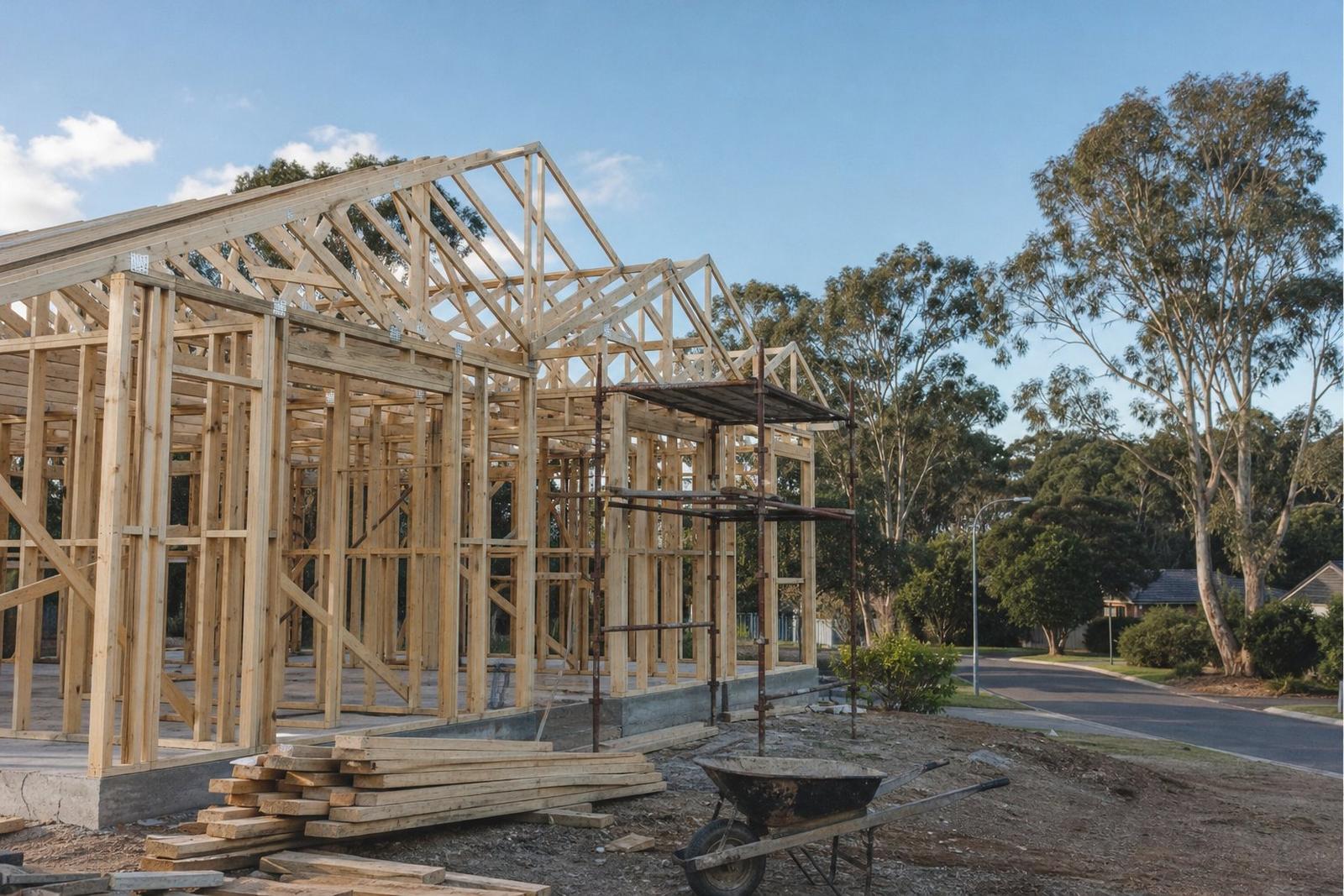
Choosing a builder is the biggest spend most people make after the house itself, and they treat it that way. They read your site slowly, check it against a friend's recommendation, then come back to it again. What they want is proof that you finish what you start: real homes in real suburbs, and a licence they can look up. A thin or dated site makes them nervous before you've said a word.
Renovators and new-home buyers worry about different things. One dreads living through the mess, the other dreads a budget that drifts. Give each group a page of its own, explain how you quote and how variations work, and name the people who will turn up on site. A short enquiry form that asks for the suburb and the kind of project is plenty to start the conversation.
What the site carries
- Your licence or registration number in full on every page, written as it appears on the licence itself.
- Finished projects with the suburb and the kind of job beside each photo, not a gallery of unlabelled images.
- Separate paths for new homes, extensions and renovations, because each buyer lies awake over something different.
- A plain account of how you quote: fixed price or cost-plus, how variations get priced, and when progress payments fall due.
- The people the client will deal with: the builder, the site supervisor and whoever answers the phone.
- A step-by-step view from first enquiry to handover, saying who does what at each step.
- The home warranty or builder's insurance that applies to your jobs, named the way your state names it.
- An enquiry form that asks for the suburb, the type of project and whether plans already exist.
- Reviews that link to where they were left, shown beside the project they're about.
- A line on whether you work with the client's architect or designer, or bring your own.
The work your customers look for
- new custom homes
- knockdown rebuilds
- second storey additions
- rear extensions
- whole house renovations
- kitchen and bathroom renovations
- granny flats
- dual occupancy builds
- decks and outdoor living
- structural alterations
- heritage restorations
What they type
- "home builder"
- "builders in"
- "house extension builder"
- "knockdown rebuild builder"
- "renovation builder"
- "granny flat builder"
- "second storey addition"
- "custom home builders near me"
The rules that shape the words
In most states the builder's licence or registration number belongs in advertising, and a website counts, so put yours in full on every page.
Only list work your licence class covers, since a claim on the site is a claim made to the public.
Australian Consumer Law covers every price and timeframe you publish, so a from price needs its conditions beside it.
Show awards with their year and reviews with a link to where they were left, so a past client can find them.
| New South Wales | In New South Wales, Building Commission NSW looks after building licences, and advertising for licensed residential work carries the licensee's name, the licence number with its category of work, and a phone number, and the rule reaches the internet. |
|---|---|
| Victoria | In Victoria, the Building and Plumbing Commission looks after building licences, and domestic building advertising carries the practitioner's name and registration number, print and online, social media included. |
| Queensland | In Queensland, the QBCC looks after building licences, and websites head its list of advertising that carries the licensee's name and number, and the name has to match the licence, so a trading name alone can fall short. |
| Western Australia | In Western Australia, Building and Energy looks after building licences, and the Building Services (Registration) Act asks for the registration number in any advertising. |
| South Australia | In South Australia, Consumer and Business Services looks after building licences, and building work advertising carries the name and the licence number. |
| Tasmania | In Tasmania, building licences sit with CBOS. Your number goes on every page whatever the rule says. |
| ACT | In the ACT, building licences sit with Access Canberra. Your number goes on every page whatever the rule says. |
| Northern Territory | In the Northern Territory, building licences sit with the Building Practitioners Board. Your number goes on every page whatever the rule says. |
Rules change. Have your licence and wording checked against your regulator before the site goes live.
Sample designs
The closest designs to a site for builders
We haven't built a sample for builders yet, so here's the nearest kit. Yours is built on your own words and photos.
-
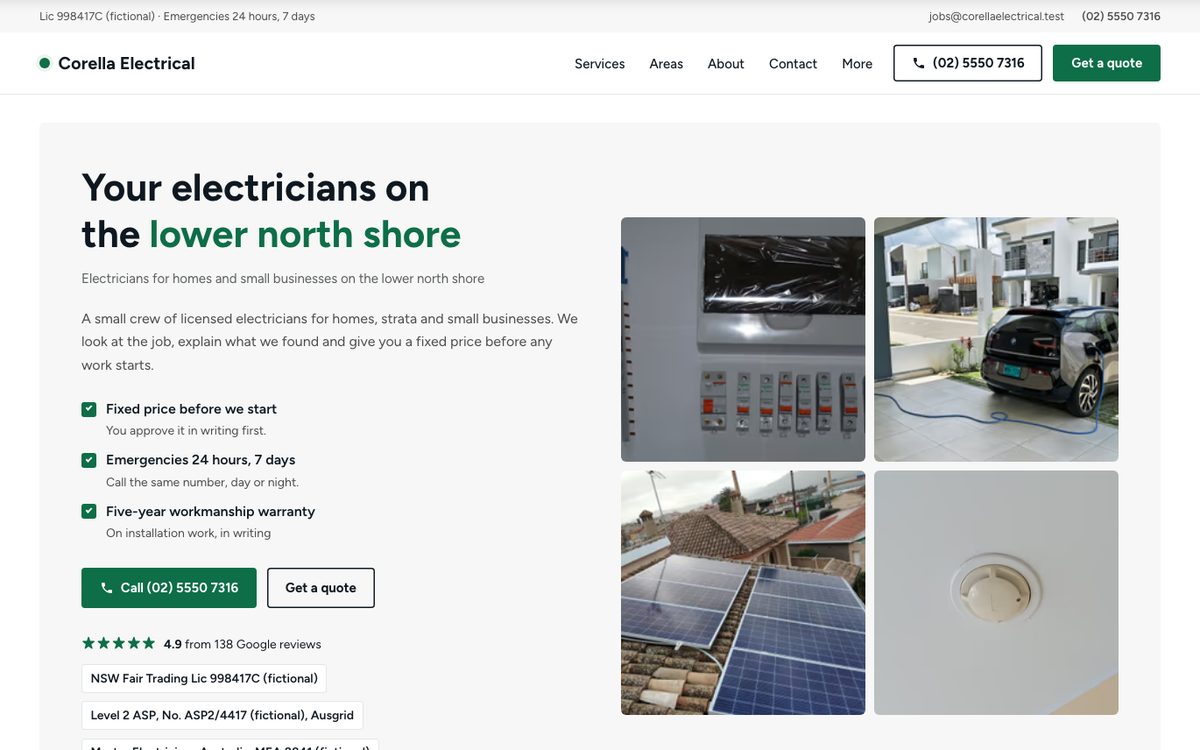
Job photographs on a grey card
A white page with flat grey cards, four job photographs in a square grid beside the heading, and the quote form straight after.
Sample design. Corella Electrical is a fictional business.
What goes wrong on older sites
- A licence number that's missing, in tiny print, or belonging to a different business name.
- A gallery with no suburbs, no project types and no completion dates.
- Stock photos of someone else's house on a page that claims to show your work.
- One generic contact form with no hint of what happens after the client presses send.
- A home page full of words like quality and care that never says what you actually build.
Questions from builders
- My best work is inside people's homes. How do I show it on a website?
- With project pages: the suburb, the kind of job, the problem the owners had, what you built and a handful of photos taken on site. You don't need client names. Ask permission before showing a street, and say honestly which parts the architect designed.
- Should a builder's site show what jobs cost?
- Explain how you price instead of publishing a figure. Say what moves the number: the site, the plans, the finishes and the council. A short note on how you quote, and how variations are handled, builds more trust than a number that won't survive the first site visit.
- Do I need separate pages for new homes and renovations?
- Yes. A couple knocking down and rebuilding want to hear about design and approvals. Someone renovating a lived-in house wants to hear how you protect their furniture and their sleep. One page trying to serve both ends up reassuring neither.
- How much of the building process should the site explain?
- Enough that a nervous client can picture their year: enquiry, site visit, quote, contract, approvals, build, handover. Give each step a sentence on what the client does and what you do. Skip the timeframes you can't promise and say what influences them.
- Clients always ask about delays. Should the site mention them?
- Briefly and honestly. Name the usual causes, like approvals, weather and supplier waits, and say how often and by what means you update the client. Buyers forgive delays far more easily than silence, and a builder who raises it first looks like one who communicates.
- I only take a few jobs a year. Is a website still worth it?
- Probably more than for a volume builder. A site lets you say what you take on and what you don't, in the order you'd say it on the phone. The enquiry form can ask about project type and rough budget, so the calls you take are the right ones.
From AUD 1,500
Fixed before we start. No deposit. You pay when it's live.
- Your site goes live on your domain and you've got 14 days before the invoice is due.
- The first year of hosting and care is included. After that it's AUD 300 a year (AUD 25 a month, billed yearly).
- You edit your own words and photos, and your old site stays where it is until you're happy.
Get a quote We reply within 24 hours.